When B2B SaaS companies see churn spike, almost all of them do the same thing: they look at the product.
They hire more customer success managers, shuffle the roadmap, run win/loss interviews, and build features that churned customers said they wanted. Six months later, churn is still high and now they've burned a quarter of the year and a significant part of the engineering budget on the wrong problem.
I've worked with 400+ B2B SaaS companies – first as Head of Pricing at Vista Equity Partners and now running Pricing I/O. The pattern I see most often isn't a product that's failing customers. It's a pricing model that was never aligned with the value customers receive in the first place.
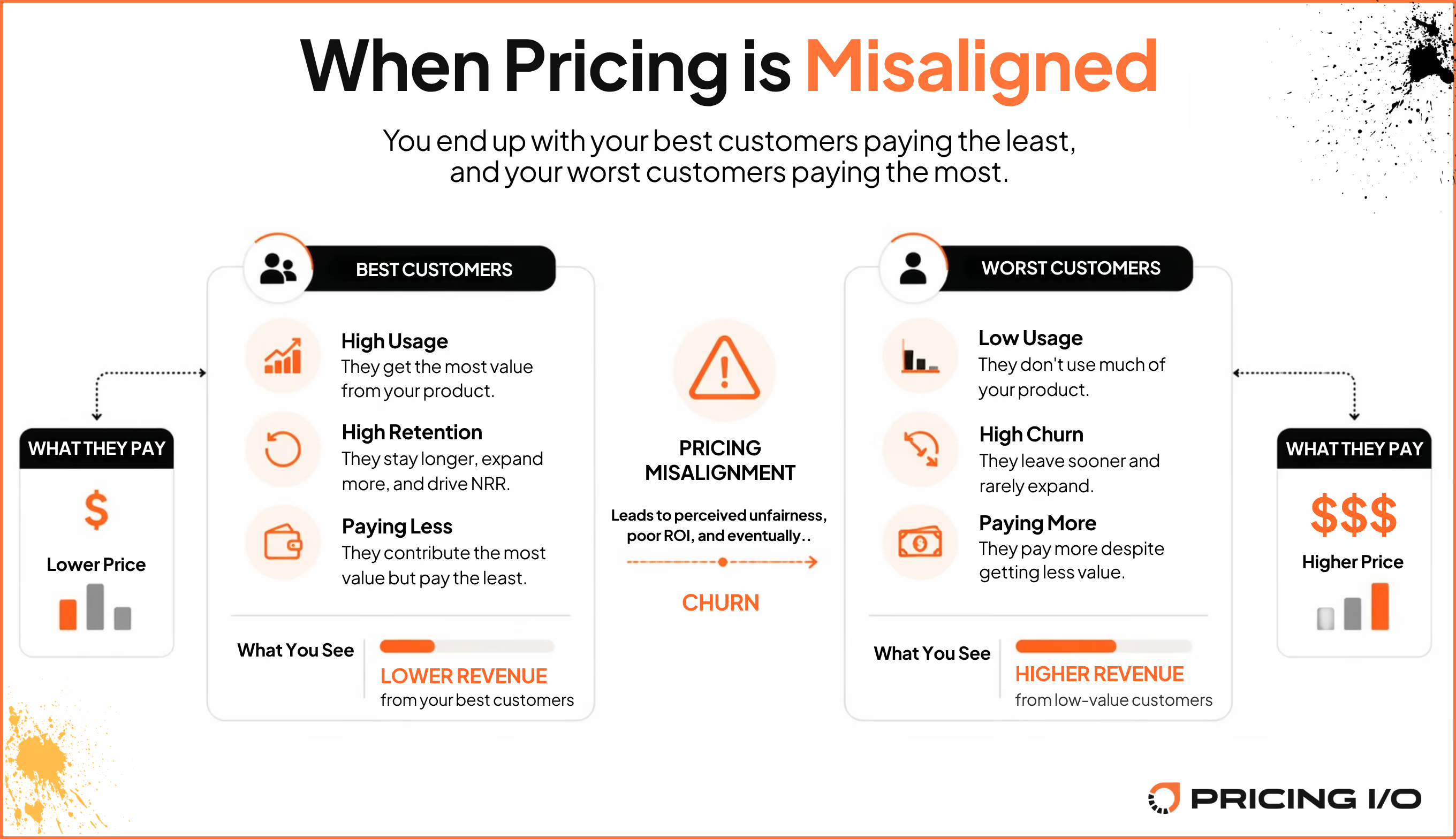
The result is always the same: your best customers end up paying the least, and your worst customers end up paying the most. Fix that, and churn moves. Often faster than anyone expects.
How to Spot Pricing-Driven Churn in Your Customer Base
When we audit a customer base at Pricing I/O, we segment customers into cohorts and sort by NRR, LTV, and usage. Three signals consistently point to a pricing problem:
Red flag #1: Your highest-NRR, most-engaged customers are paying you the least.
Red flag #2: Your least-engaged customers – the ones extracting minimal value – are paying you the most.
Red flag #3: Exit surveys include phrases like "too expensive for what we need," "we're not using it enough," or "it didn't fit our use case."
That last one is the sneakiest. It sounds like a product complaint. But "not using it enough" and "didn't fit our use case" are descriptions of a value-to-price gap – a pricing problem wearing a product disguise.
The Three Root Causes of Pricing-Driven Churn in B2B SaaS
1. You're Charging for the Wrong Value Metric
Your value metric is the unit you charge by. When it doesn't align with how customers actually receive value, everything breaks. Heavy users underpay and don't expand. Light users overpay and churn.
Per-user pricing is the most common offender. It penalizes adoption – the more people use your product, the more they pay, regardless of actual value extracted.
Example: A workflow automation company charges per seat. But value isn't driven by logins – it's driven by automations. Power users running hundreds of workflows sit on the same plan as teams barely using the tool. The price they pay has no relationship to the value they receive.
2. Your Customer Segmentation Is Too Shallow
Small, medium, and large is a reasonable place to start. Most companies do. But as your product matures and your customer base grows, size alone stops being predictive of value.
Two mid-market companies at the same price point can have completely different needs. One operates in a simple vertical. The other navigates complex compliance requirements and deep integrations. Charging them the same creates a mismatch that shows up as churn on one end and underpricing on the other.
Effective segmentation factors in complexity, maturity, rate of change, and the nature of their customers and industries – because those variables determine how much value a customer actually needs from you. See Segmentation: The Secret to a Smart Pricing Model for a deeper breakdown.
3. Your Pricing Doesn't Match the Customer's Time to Value
If your customers don't realize meaningful value for six to nine months after adoption, but you're charging premium prices from day one, you've built a churn factory into your pricing model. The gap between investment and realized value is where cancellation decisions get made.
This is especially common in compliance software, enterprise analytics, and anything with heavy implementation timelines. The value is real – it just takes time to materialize. When the price arrives before the value does, customers leave before they ever see the return.

How to Diagnose and Fix Pricing-Driven Churn
Here is the five-step framework we run at Pricing I/O:
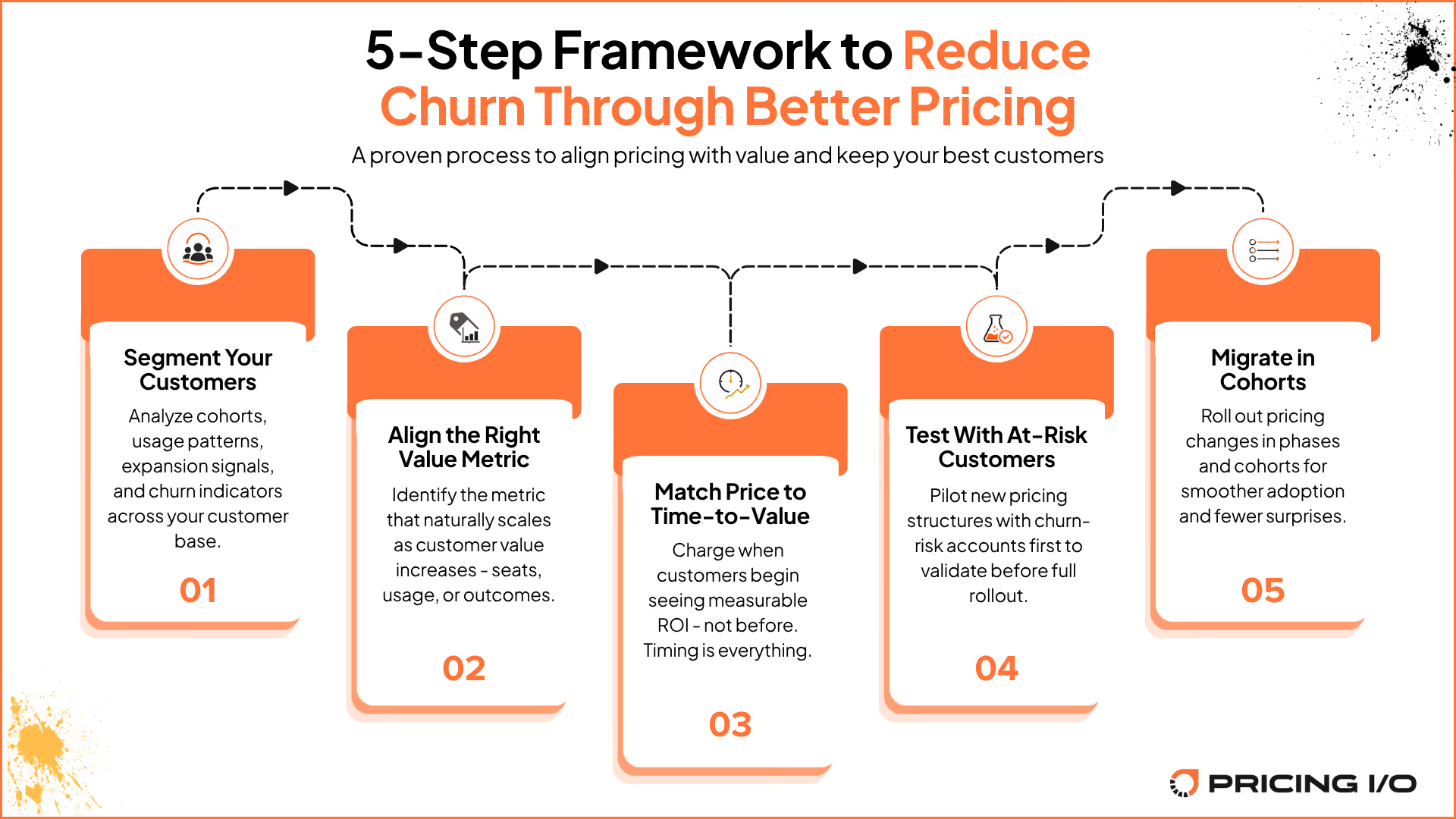
Step 1: Segment your customers by NRR expansion, LTV, and usage volume. See your customer base the way a pricing model sees it – by value delivered and value captured. Our free SaaS Monetization Data Blueprint can help structure this.
Step 2: Align the right value metric. Find the activity that correlates most with your best expanders – the customers who stay longest and buy more. That's your candidate. It needs to be measurable, trackable, and something that scales naturally with customer success.
Step 3: Account for time to value. Map when customers actually start feeling the return on what they paid. Your pricing structure should mirror that curve. Customers who pay before they feel value churn. Customers who feel value before they pay expand.
Step 4: Test with at-risk customers. Introduce the new pricing to a small group showing signs of potential churn. Get their feedback. Positive signals here are your green light and the evidence you need to get leadership and the board aligned before a broader rollout.
Step 5: Migrate in cohorts. Start with the customers whose data shows the clearest misalignment. Each cohort teaches you how to communicate the change and handle objections. By the third or fourth, it's routine.
Fix the Pricing Before You Fix the Product
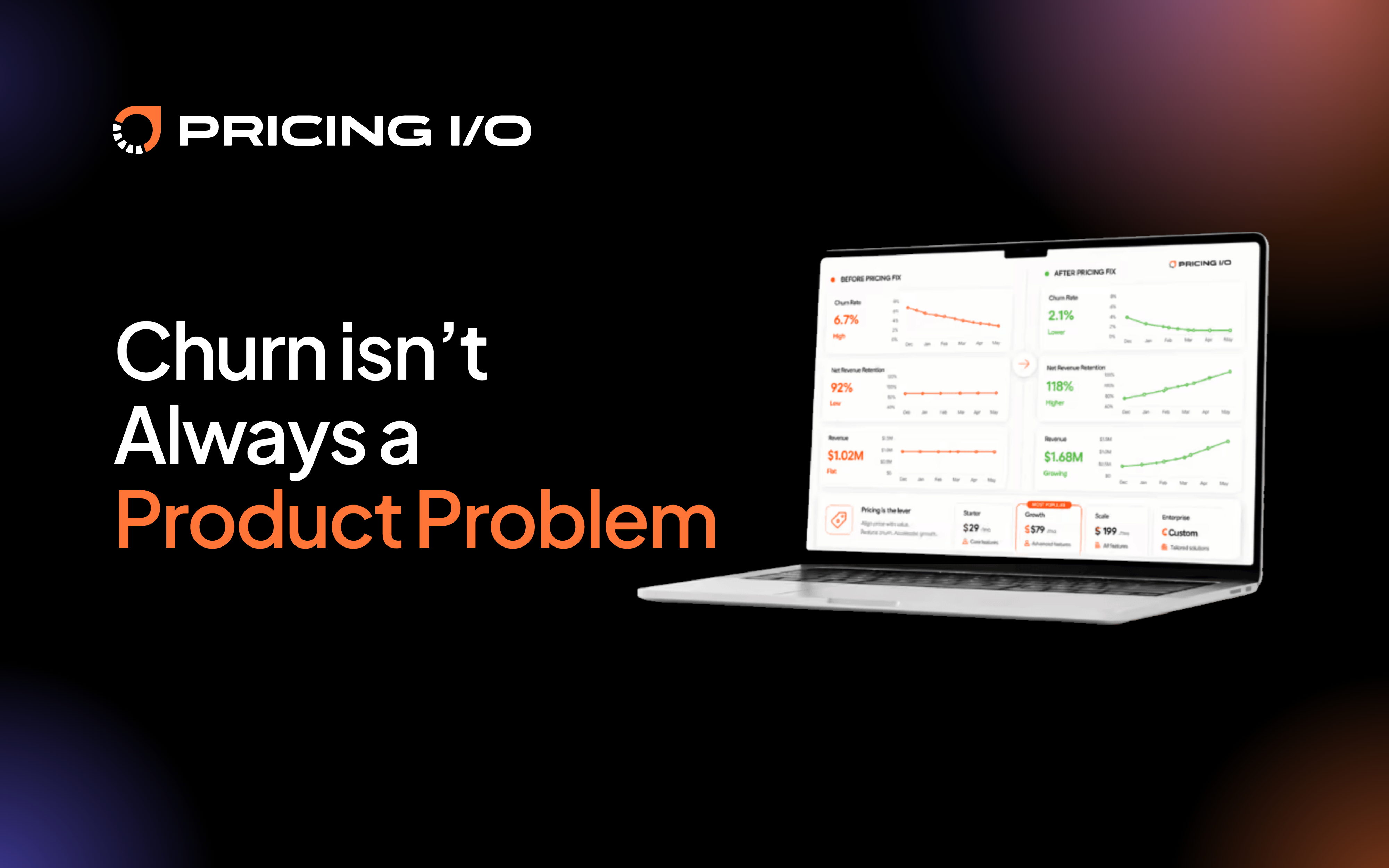
Across Vista Equity Partners portfolio companies, pricing realignment consistently reduced churn by 20 to 30 percent without a single product change.
Fixing a pricing problem is also faster than fixing a product. Before you kick off a six month roadmap overhaul, check the pricing first. You might not even need it.
If you want a faster way in, the Pricing Excellence Quiz was built for exactly this – it finds the gaps in your pricing strategy and gives you a tailored roadmap to fix them.
Frequently Asked Questions
What is pricing-driven churn in B2B SaaS?
Pricing-driven churn is when customers leave because the price never matched the value they were getting not because the product failed them. It's one of the most misdiagnosed problems in SaaS because it looks exactly like a product problem.
How do I know if my churn is a pricing problem or a product problem?
If your highest-usage customers are paying less than your lowest-usage ones, that's pricing. If exit surveys mention cost or value concerns rather than missing features, that's pricing. Product problems show up in feature requests while pricing problems show up in cohort data.
What is a value metric in SaaS pricing?
A value metric is the unit you charge by. When it doesn't scale with the value a customer actually receives – like charging per seat when value comes from usage volume – heavy users underpay and light users churn.
What is time to value mismatch?
It's when customers pay full price before they've felt any real return. The gap between what they're paying and what they're experiencing is where most cancellation decisions happen.
How long does it take to fix pricing-driven churn?
Faster than fixing a product. Pricing changes can be tested with at-risk customers within weeks and rolled out in cohorts shortly after – well before any product change would ship.
Can pricing changes reduce churn without touching the product?
Yes. Across Vista Equity Partners portfolio companies, pricing realignment reduced churn by 20 to 30 percent without a single product change.
Should I fix pricing before doing win/loss interviews?
Check your cohort data first. If your best customers are paying the least and your exit surveys mention cost or value concerns, you likely already have enough to confirm it's a pricing problem without spending weeks on interviews.