Industries

SaaS pricing for healthcare technology companies

Your customers want to do more without adding staff or beds, and healthcare software is still priced around both. We rebuild pricing for patient engagement, laboratory and quality systems, clinical trial software and health data platforms so your price follows the work, not the headcount.
Talk to an Expert
Explore Case Studies
Trusted by 18+ healthcare technology companies
Healthcare pricing challenges

Where healthcare software pricing breaks

Your healthcare software pricing doesn't reflect how healthcare now works. The market moved from counting beds and headcount to measuring throughput and outcomes, and pricing stayed where it was.
See How We Help →

COMMON CHALLENGES

Your customer grows and your bill stays flat
Health systems are serving more patients without adding beds. Baptist Health cut length of stay by 30% and created the equivalent capacity without building anything. Your customer serves more patients than last year and pays you the same.
Baptist Health, Vizient, 2026.
What you sell isn't what they thought they bought
Buyers sign expecting the product and then find the features they need sitting in optional modules. Every add-on that appears after signing makes the next renewal harder.
KLAS Research, 2024.
You can't charge for making the product better
In regulated software, every update forces the customer to re-test and document the system. So they delay upgrades, stay on old versions, and the features you build don't bring in any more revenue.
Your customer can't bill for your AI
Most AI billing codes carry no payment rate. Among the health systems furthest along with AI, only 18% can measure what it saved them, so your buyer can't recover the cost and can't show the saving either.
Bipartisan Policy Center, 2026. Deloitte 2026 US Healthcare CFO Survey.
480+
B2B SaaS and AI clients
18+
in healthcare
15x
Average ROI in year one
$780M
ARR captured for clients
Where We Help

How we help healthcare technology companies

Contact Us  →
01
Discover & diagnose
We dig into your sales, product, customer and market data to find where value is created and where revenue leaks — including which accounts pay far more or less than the value they get.
02
Design & validate
We build the model with your team and test the impact customer by customer before you commit. Your price follows the work your product does, not the size of your customer's organisation.
03
Deliver & align
We build buy-in across sales, product, finance and leadership while the model takes shape, then hand over the playbook — with pricing your team can defend against a health system's procurement.
Contact Us →
You don't get a lone consultant with a fancy title. You get our entire brain trust — tearing down bad ideas before they reach you.
Meet the Team
TESTIMONIALS

The word on the street
from real SaaS leaders.

1
/
5
"Pricing is the bridge between the product you build and the value the customer actually receives."
Alyssa Higgins | CipherHealth
1
/
5

Our healthcare pricing playbook
Learn Our Method →
Pricing that follows the work, not the size
Beds, providers and covered lives measure how big your customer is. Pricing moves onto what the software actually does for them.
Packaging without the module surprise
Buyers should know at signing what they are getting and what costs more. Put the features they need in the price rather than in a list of add-ons.
A discount floor your team can hold
Health systems arrive expecting a bundle discount. Your reps need a number they can defend and a reason the buyer accepts it.
Pricing AI your customer can justify
Your buyer cannot bill anyone for AI, so the case has to be built on cost saved. That changes what you charge for and how you prove it.
Evidence a procurement committee will accept
Healthcare buys by committee, with benchmark data in the room. Every price point comes with the analysis behind it.
Moving the existing base without losing it
Repricing existing customers is where most pricing changes fail. You get a migration plan by segment before anything changes.
Learn Our Method →
01
Discover & diagnose
We dig deep into your sales, product, customer, and market data to find where value is being created and where revenue is leaking out.
 Healthcare sub-sectors

The pricing problems we see across healthcare sub-sectors

01
Patient engagement software
You charge per message and per reminder. So the more patients your customer reaches, the more they pay — and reaching patients is what they bought the product for.
02
Patient scheduling and access
You charge per provider, and your product's job is to fill their calendar. When you fill it to 95% you earn no more than if it sat at 60%.
03
Quality management software
Priced per seat to teams that never get bigger. Your customer has more rules to follow every year, but they are not adding people — so your revenue stays flat.
04
Laboratory information systems
When you charge per seat, labs limit who gets a login. Work moves into spreadsheets and shared accounts, so less of the lab actually runs on your software.
LabLynx, 2026.
05
Clinical trial and research software
Priced per study, but studies change. Every change to the trial design means a new agreement and a new fee, so your commercial team spends its time renegotiating instead of selling.
Curebase, clinical trial software guide, 2026.
06
Population health analytics
Payers want to pay for usage and results, not a flat fee. They increasingly ask vendors to guarantee savings, which makes a fixed price per member harder to defend.
Vozo Health, healthcare software pricing models, 2026.
Our Process

One proven process,
shaped around your needs.

Every engagement follows a connected pricing process, with the depth and ongoing support shaped around your needs.
01

Research

Find where value is created, and where it isn't

02

Guidance

See what you're charging versus what you could

03

Research

Build pricing that's easy to sell and easy to buy

04

Validation

See the revenue impact before you commit

05

Implementation

Leave with a board-ready model and the org behind it

06

Execute & Optimize

Keep pricing improving as the business changes

Sprint

Answer a focused pricing question
Research → Guidance

Design

Build, validate & launch your pricing
Research → Implementation

Currv

Continuously execute, measure & opimize
Research → Execute & Optimize
Healthcare pricing models

Which pricing model fits healthcare software?

Healthcare software is priced on size more often than on use. Every model below counts something the customer already has — people, beds, members, sites — rather than the work your software does.
Per seat
Per bed
Per member
Per study or site
What you charge for
Each clinician or named user with a login
Each licensed bed in the facility
Each person covered by the health plan
Each trial or research location
Where we see it work
Practice software, quality systems and lab systems bought by a defined team
Facility-wide platforms across a hospital
Payer analytics, where the population is the product
Research software where one study is one project
Where it breaks
Users who never open it pay the same as heavy ones, so customers ration logins
Your customer treats more patients in the same beds and pays you the same
Your revenue tracks how many members they have, not what they learn from the data
Studies change, so every amendment is a renegotiation
Per seat
What you charge for
Each clinician or named user with a login
Where we see it work
Facility-wide platforms across a hospital
Where it breaks
Users who never open it pay the same as heavy ones, so customers ration logins
Per bed
What you charge for
Each licensed bed in the facility
Where we see it work
Facility-wide platforms across a hospital
Where it breaks
Your customer treats more patients in the same beds and pays you the same
Per member
What you charge for
Each person covered by the health plan
Where we see it work
Payer analytics, where the population is the product
Where it breaks
Your revenue tracks how many members they have, not what they learn from the data
Per study or site
What you charge for
Each trial or research location
Where we see it work
Research software where one study is one project
Where it breaks
Studies change, so every amendment is a renegotiation
Ways to work together

Engagements scaled to your moment.

Same proven process every time. Scope and duration depend on your complexity, goals, and level of engagement.

Sprint

4-6 weeks
One focused input to a pricing challenge: research, a competitive read, or senior judgment on the decision in front of you. Best for teams who need clarity fast, not a new pricing model.
Uncover what customers actually value and what they'll pay for
Secret shop your pricing, packaging, and positioning against real competitors
Senior, unbiased guidance on a high-stakes decision
Talk to us
Limited early access

Design

12-16 weeks on average
Our flagship engagement, and how most teams work with us. The full build, tailored to your business. Best for when your current model can't scale with your growth plans.
‍
Understand customer behavior, value drivers, market context, and revenue leakage
Build a pricing and packaging model aligned to customer value and business goals
Model revenue impact and align stakeholders behind the change
Walk away with a model your board can back and your team can launch
Talk to us
Limited early access

Sprint

Ongoing
 Currv is our Pricing Decision Platform, and a companion app to our engagements, where your pricing lives and improves. Best for teams who want pricing to keep working long after launch.
Your pricing model, data, and guardrails in one system
Pushes pricing out to the tools that execute it
Continuous analysis of where revenue is leaking
A dedicated strategist pod on the decisions that matter
Request early access
Limited early access
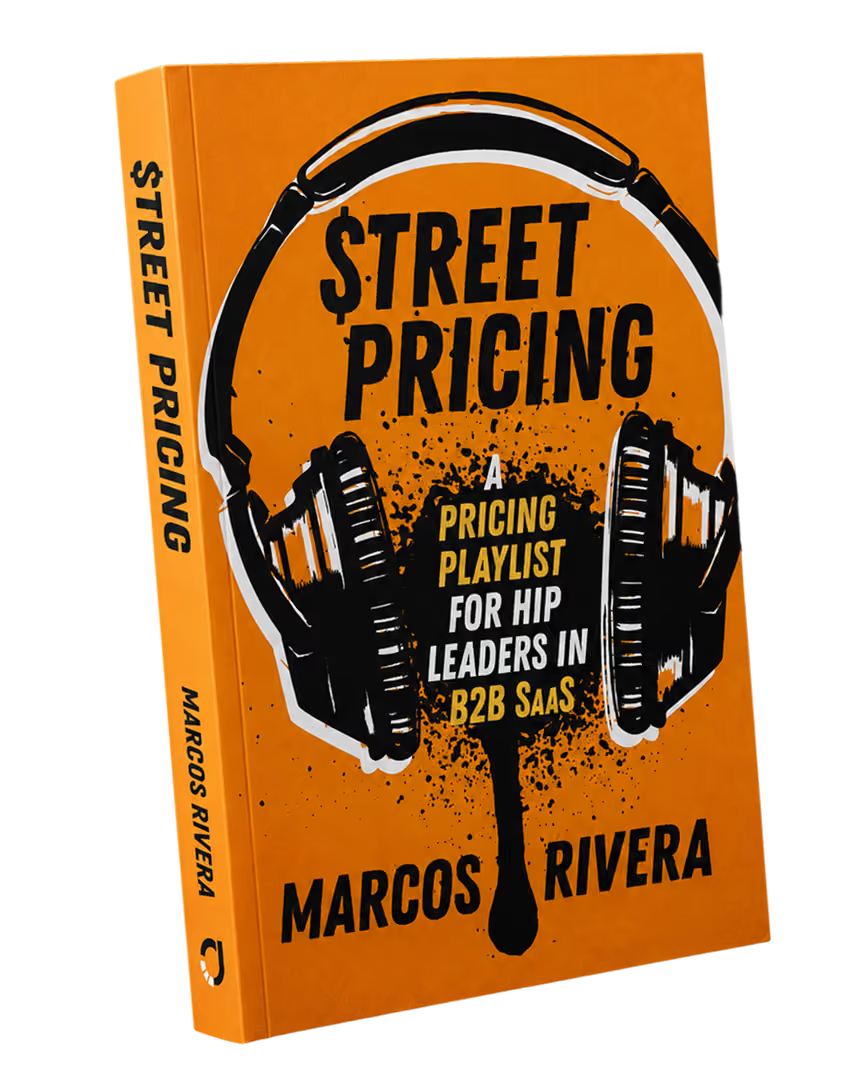
Street Pricing

Real-world pricing expertise, built from hundreds of SaaS engagements.

"Stay curious, take the lead, and help others." It's the philosophy our founder, Marcos Rivera, learned growing up in the Bronx. Add two decades in SaaS pricing and a hand-picked and trained team that shares it, and you get how Pricing I/O works. No theory, no decks, just work that delivers.

Street Pricing Book

Marcos Rivera's playbook for SaaS leaders: the frameworks and hard-won lessons behind how we work.

Street Pricing Podcast

Conversations with founders & operators applying our principles to real-world pricing and growth challenges.
View all resources →
FAQ

Questions from healthcare technology leaders

Read the full FAQ →

Has Pricing I/O worked with healthcare technology companies?

Yes — 18 and counting, across patient engagement, scheduling and access, laboratory systems, quality management, clinical trial software and population health analytics.

What should healthcare software charge for instead of beds or providers?

It depends on what your product does. The test is whether the price follows the work your software performs rather than the size of your customer's organisation. A scheduling platform might charge for appointments filled, a lab system for samples processed, a quality platform for documents under control. Whatever it is, it has to be measurable, and a procurement committee has to be able to check it.

How should healthcare software price AI features?

Carefully, because your customer cannot bill anyone for them. Most AI billing codes carry no payment rate, so the AI comes out of their own budget — and among health systems furthest along with AI, only 18% can measure what it saved them. Build the case on cost avoided rather than revenue earned, and price accordingly. More on pricing AI products.

Sources: Bipartisan Policy Center, 2026. Deloitte 2026 US Healthcare CFO Survey.

How do we hold price against a health system's procurement team?

With evidence, not conviction. Large systems arrive with benchmark data and expect a bundle discount. A discount floor works when your reps can explain what sits behind the number and what the buyer gives up by going below it.

Should healthcare software offer outcome-based pricing?

Sometimes, and it exists in this market — structures like a base fee plus a payment for each readmission prevented. It works when the outcome is measurable, attributable to your software, and inside your customer's control. Most of the time one of those three is missing.
Sources: Bipartisan Policy Center, 2026. Deloitte 2026 US Healthcare CFO Survey.
Read the full FAQ →
Our Blog

Articles and insights from
the pricing frontlines.

View All Posts →
September 25, 2026

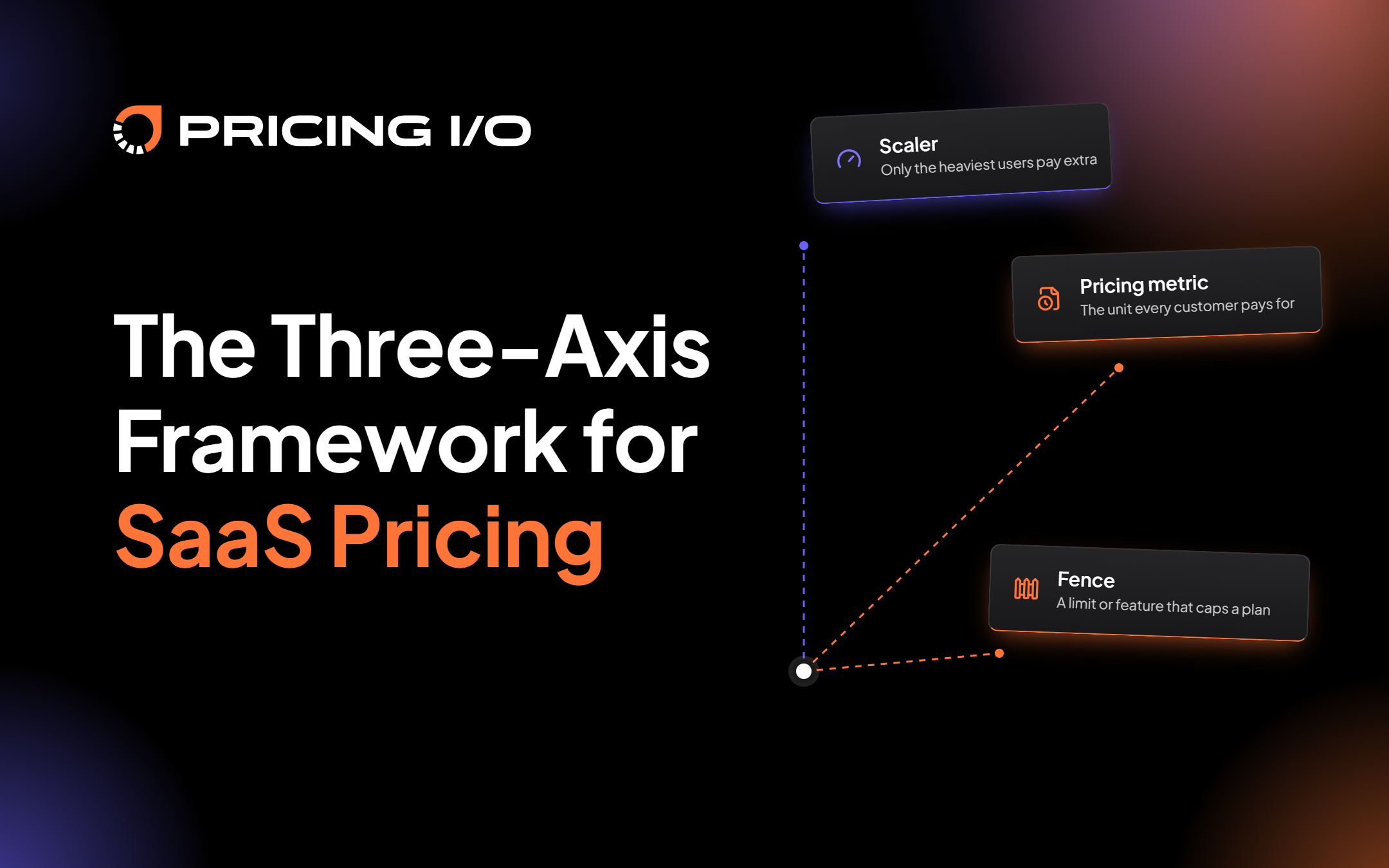
How to Structure SaaS Pricing When Per-User Breaks: The Three-Axis Framework

August 21, 2026

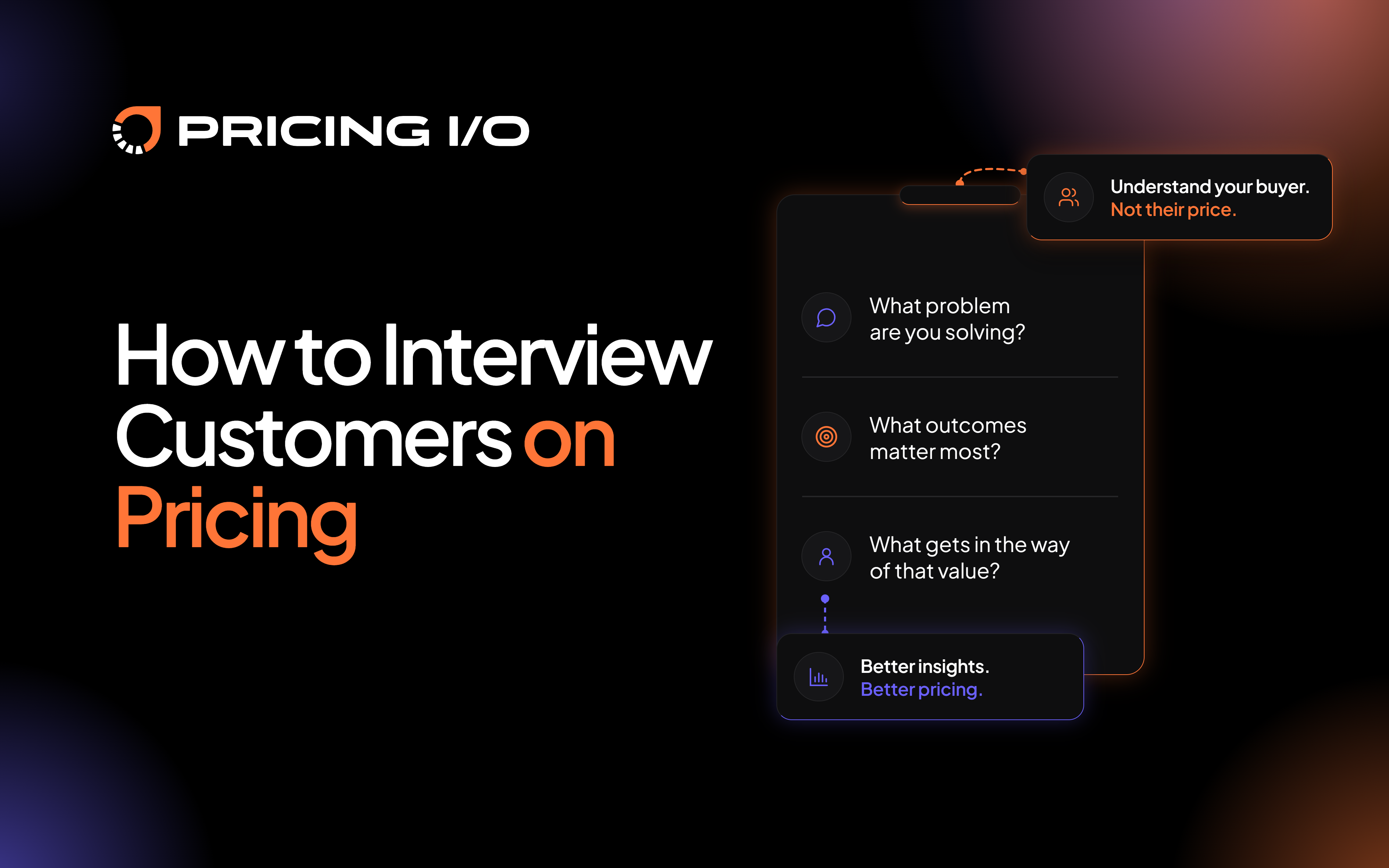
How to Interview Customers About Pricing (Without Asking What They'd Pay)

August 7, 2026

How to Monetize AI Without Hurting Growth