Industries

SaaS pricing for proptech and real estate software companies

Our price grows with your customer's portfolio while your product stays the same. We rebuild pricing for property, title and real estate data platforms so the price rises with value, not just with portfolio size.
Talk to an Expert
Explore Case Studies
Trusted by 25+ proptech and real estate software companies
Proptech pricing challenges

Where proptech pricing breaks

Proptech pricing usually scales with something the customer owns — doors, square feet, transactions. Each of those creates a different problem as the customer grows. And when the housing market slows, transaction volume falls with it.
See How We Help →

COMMON CHALLENGES

Per-unit pricing punishes your best customers
A portfolio that grows from 20 doors to 200 pays ten times more for the same product. The bigger the customer, the harder the renewal.
Market rates of $1–5 per unit per month, verified against published vendor pricing, 2026.
The renewal is harder than the sale
Minimums, onboarding fees and add-ons put the real price well above the headline rate. Buyers find out after signing, and bring it up at renewal.
Charging for AI before customers depend on it
AI adoption in property management rose from 20% to 58% in a year, while only 8% of companies had fully automated any workflow. Customers are trying it, not relying on it. A premium is hard to hold for something they could switch off.
Buildium 2026 State of the Property Management Industry Report.
A slow market takes transaction-linked revenue with it
Title, closing and lead generation platforms earn per transaction, so a housing slowdown lands directly on revenue. 
480+
B2B SaaS and AI clients
25+
in proptech
15x
Average ROI in year one
$780M
ARR captured for clients
Where we help

How we help proptech companies

Contact Us  →
01
Discover & diagnose
We dig into your sales, product, customer and market data to find where value is created and where revenue leaks — including which accounts are furthest from what they pay today.
02
Design & validate
We build the model with your team and test the impact customer by customer before you commit, so the value metric grows when your customer gets more from the product, not when their portfolio grows or their market moves.
03
Deliver & align
We build buy-in across sales, product, finance and leadership while the model takes shape, then hand over the playbook — with pricing your team can defend at renewal.
Contact Us →
You don't get a lone consultant with a fancy title. You get our entire brain trust — tearing down bad ideas before they reach you.
Meet the Team
TESTIMONIALS

The word on the street
from real SaaS leaders.

1
/
5
"Not only were the recommendations they provided extremely valuable, but they also helped us establish the internal model necessary to maintain and refine our pricing program into the future."
Cameron Barragan | Storable
"Pricing is the most powerful lever we have to communicate the value of the protection we provide."
Tyler Adams | CertifID
1
/
5

Our proptech pricing playbook
Learn Our Method →
A meter that tracks value, not portfolio size
Doors and square feet measure how big your customer is, not how much they get from you. Pricing moves onto the work your product performs.
Pricing that survives a growing customer
As a portfolio triples, the bill should not. Volume bands, caps and tier changes keep large customers from paying a penalty for success.
One price, not a price plus six add-ons
Minimums, onboarding fees and module charges make the real cost hard to see. Packaging brings it back into one number a buyer can check.
Deciding what AI is worth charging for
Customers are adopting AI features quickly but few depend on them yet. The question is which ones they already rely on, because those are the ones that can carry a premium.
Revenue that holds when transactions slow
Platforms priced per transaction fall with the housing market. Recurring elements that stay useful between deals reduce how far you fall.
Moving the existing base without losing it
Repricing existing customers is where most pricing changes fail. You get a migration plan by segment before anything changes.
Learn Our Method →
01
Discover & diagnose
We dig deep into your sales, product, customer, and market data to find where value is being created and where revenue is leaking out.
Sub-sectors

The pricing problems we see across marketing and sales tech sub-sectors

01
Commercial real estate data and valuation
Your data costs are fixed and high, but you sell per seat or per report. Heavy users can cost more than they pay.
02
Property and portfolio management
You charge per door, so a customer who triples their portfolio triples their bill for the same product. The bigger they get, the harder the renewal.
03
Title, escrow and closing
Priced per transaction, so your revenue rises and falls with the housing market. Your busiest customers in a good year can be your smallest in a bad one. 
04
Coworking and flexible space
Priced per desk or per location, while your customer's whole model is filling space that would otherwise sit empty. The meter doesn't reward that.
05
Hospitality and short-term rental
Charging per room means your revenue follows your customer's occupancy, which follows the season. A quiet quarter for them is a quiet quarter for you.
06
Real estate lead generation and agent tools
Agents spend a few hundred dollars a month on technology in total. Your price has to fit inside that budget alongside everything else they already pay for.
NAR 2025 Technology Survey.
Our Process

One proven process,
shaped around your needs.

Every engagement follows a connected pricing process, with the depth and ongoing support shaped around your needs.
01

Research

Find where value is created, and where it isn't

02

Guidance

See what you're charging versus what you could

03

Research

Build pricing that's easy to sell and easy to buy

04

Validation

See the revenue impact before you commit

05

Implementation

Leave with a board-ready model and the org behind it

06

Execute & Optimize

Keep pricing improving as the business changes

Sprint

Answer a focused pricing question
Research → Guidance

Design

Build, validate & launch your pricing
Research → Implementation

Currv

Continuously execute, measure & opimize
Research → Execute & Optimize
Proptech pricing models

Which pricing model fits proptech?

Most proptech pricing counts doors, desks, rooms or transactions. That is easy to explain and easy to sell, but it stops matching value the moment the customer grows.
Flat fee
Per unit or door
Tiered by portfolio size
Per transaction
What you charge for
One price whatever the portfolio size
Each door, desk, room or square foot
A band covering a range of sizes
Each closing, verification or deal
Where we see it work
When your customers are all a similar size and usage barely varies between them
Property and portfolio software, where the customer's estate is stable
Operators who grow in steps rather than continuously
Title, closing and transaction platforms, where each deal is a clear unit the customer already counts
Where it breaks
Too expensive for your smallest customers, too cheap for your largest
The customer grows and pays more for the same product
Customers stay just under the next band to avoid the price jump, so they add fewer units to your platform
A slow housing market cuts your revenue with theirs
Flat fee
What you charge for
One price whatever the portfolio size
Where we see it work
Property and portfolio software, where the customer's estate is stable
Where it breaks
Too expensive for your smallest customers, too cheap for your largest
Per unit or door
What you charge for
Each door, desk, room or square foot
Where we see it work
Property and portfolio software, where the customer's estate is stable
Where it breaks
The customer grows and pays more for the same product
Tiered by portfolio size
What you charge for
A band covering a range of sizes
Where we see it work
Operators who grow in steps rather than continuously
Where it breaks
Customers stay just under the next band to avoid the price jump, so they add fewer units to your platform
Per transaction
What you charge for
Each closing, verification or deal
Where we see it work
Title, closing and transaction platforms, where each deal is a clear unit the customer already counts
Where it breaks
A slow housing market cuts your revenue with theirs
Ways to work together

Engagements scaled to your moment.

Same proven process every time. Scope and duration depend on your complexity, goals, and level of engagement.

Sprint

4-6 weeks
One focused input to a pricing challenge: research, a competitive read, or senior judgment on the decision in front of you. Best for teams who need clarity fast, not a new pricing model.
Uncover what customers actually value and what they'll pay for
Secret shop your pricing, packaging, and positioning against real competitors
Senior, unbiased guidance on a high-stakes decision
Talk to us
Limited early access

Design

12-16 weeks on average
Our flagship engagement, and how most teams work with us. The full build, tailored to your business. Best for when your current model can't scale with your growth plans.
‍
Understand customer behavior, value drivers, market context, and revenue leakage
Build a pricing and packaging model aligned to customer value and business goals
Model revenue impact and align stakeholders behind the change
Walk away with a model your board can back and your team can launch
Talk to us
Limited early access

Sprint

Ongoing
 Currv is our Pricing Decision Platform, and a companion app to our engagements, where your pricing lives and improves. Best for teams who want pricing to keep working long after launch.
Your pricing model, data, and guardrails in one system
Pushes pricing out to the tools that execute it
Continuous analysis of where revenue is leaking
A dedicated strategist pod on the decisions that matter
Request early access
Limited early access
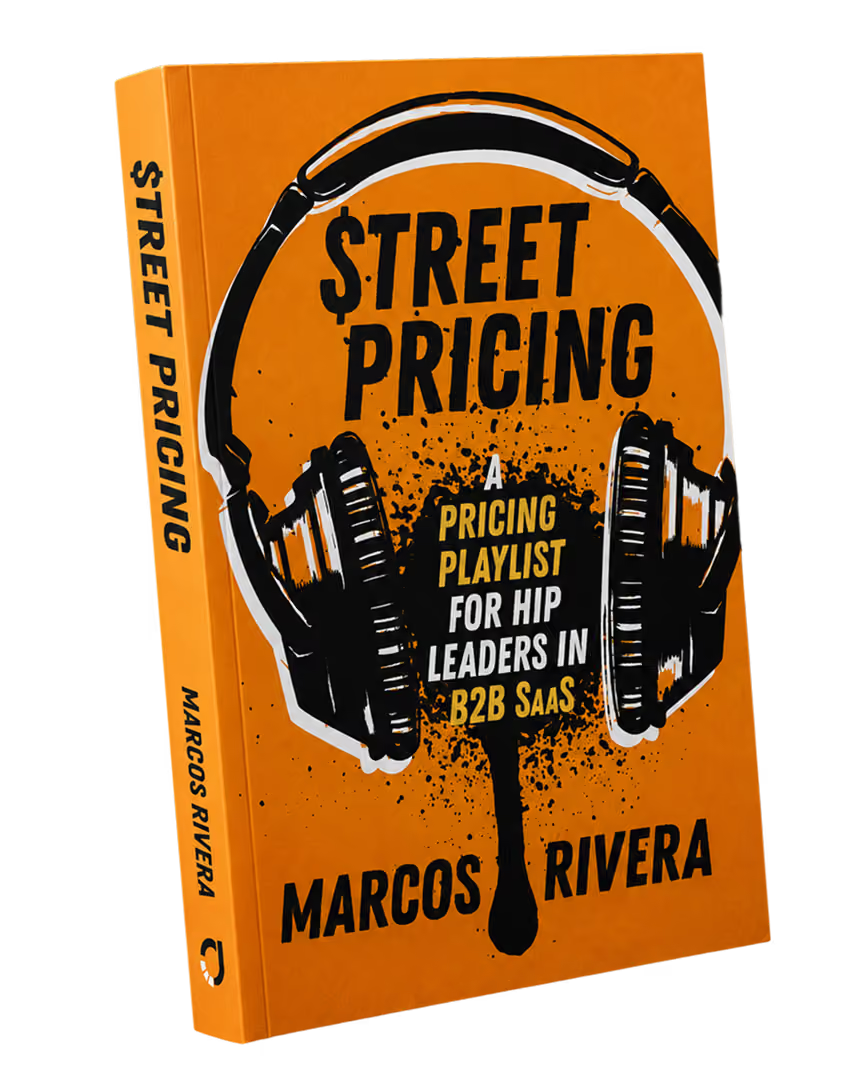
Street Pricing

Real-world pricing expertise, built from hundreds of SaaS engagements.

"Stay curious, take the lead, and help others." It's the philosophy our founder, Marcos Rivera, learned growing up in the Bronx. Add two decades in SaaS pricing and a hand-picked and trained team that shares it, and you get how Pricing I/O works. No theory, no decks, just work that delivers.

Street Pricing Book

Marcos Rivera's playbook for SaaS leaders: the frameworks and hard-won lessons behind how we work.

Street Pricing Podcast

Conversations with founders & operators applying our principles to real-world pricing and growth challenges.
View all resources →
FAQ

Questions from proptech leaders

Read the full FAQ →

Has Pricing I/O worked with proptech companies?

Yes — 25 and counting, across property and portfolio management, commercial real estate data and valuation, title and closing, coworking and flexible space, hospitality, and agent lead generation.

What should proptech companies charge for instead of doors or units?

It depends on what your product actually does. The test is whether the metric tracks the work your software performs, rather than how large your customer is or how their market is doing. A leasing platform might charge for leases executed, a maintenance platform for work orders completed, a valuation platform for valuations delivered. Whatever it is, it has to be measurable, and your customer has to be able to check it themselves.

How do proptech companies price for customers who grow fast?

Volume bands rather than a straight per-unit rate. A customer going from 20 doors to 200 should not pay ten times more for the same product, and the bands are what stop that.

Should proptech companies charge extra for AI features?

It depends on whether customers depend on the feature. A premium holds when they would notice its absence and when the value it creates is measurable. Most property management AI isn't there yet — adoption rose from 20% to 58% in a year, while only 8% of companies had fully automated any workflow. Until that changes, the base is usually the better home for it, with separate pricing once usage proves out. More on pricing AI products.

Buildium 2026 State of the Property Management Industry Report.

How do proptech companies protect revenue when the housing market slows?

Add elements that stay useful between transactions. Platforms priced purely per closing fall with the market; platforms with recurring value in the quiet periods fall less far.

Read the full FAQ →
Our Blog

Articles and insights from
the pricing frontlines.

View All Posts →
September 25, 2026

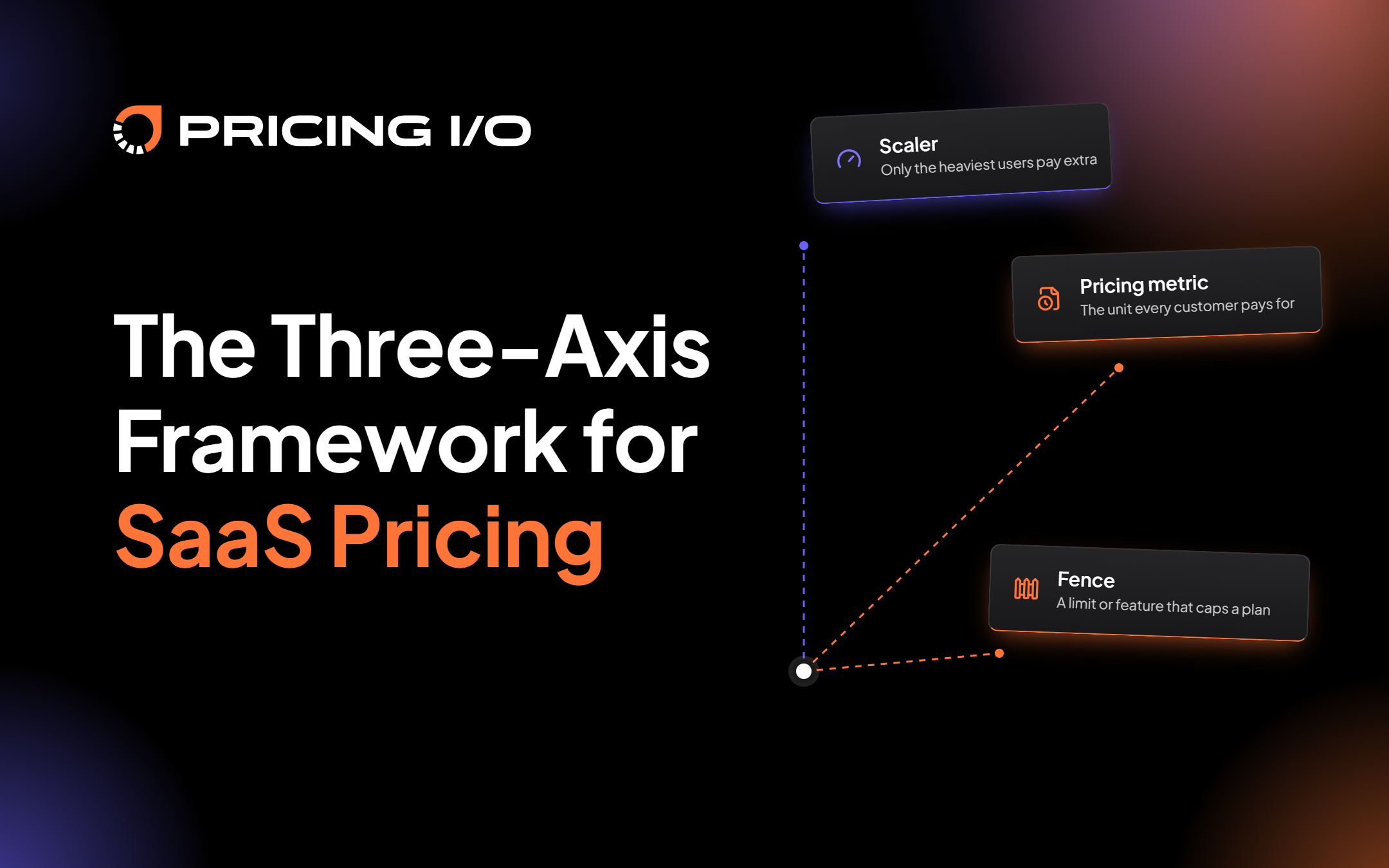
How to Structure SaaS Pricing When Per-User Breaks: The Three-Axis Framework

August 21, 2026

How to Interview Customers About Pricing (Without Asking What They'd Pay)

August 7, 2026

How to Monetize AI Without Hurting Growth