SaaS pricing for marketing and sales tech companies


Why martech and sales tech pricing is breaking
COMMON CHALLENGES


How we help marketing and sales tech companies
















Xactly won a pricing innovation award as a result of the work.
The word on the street from real SaaS leaders.









The pricing problems we see across marketing and sales tech sub-sectors
One proven process, shaped around your needs.

Discover
Find where value is created, and where it isn't
Diagnose
See what you're charging versus what you could
design
Build pricing that's easy to sell and easy to buy
validate
See the revenue impact before you commit
align
Leave with a board-ready model and the org behind it
EXECUTE & EVOLVE
Keep pricing improving as the business changes


Sprint
Design
Currv
Which pricing model fits marketing and sales tech?


Engagements scaled to your moment.

Sprint

Design
Sprint

Real-world pricing expertise, built from hundreds of SaaS engagements.
"Stay curious, take the lead, and help others." It's the philosophy our founder, Marcos Rivera, learned growing up in the Bronx. Add two decades in SaaS pricing and a hand-picked and trained team that shares it, and you get how Pricing I/O works. No theory, no decks, just work that delivers.

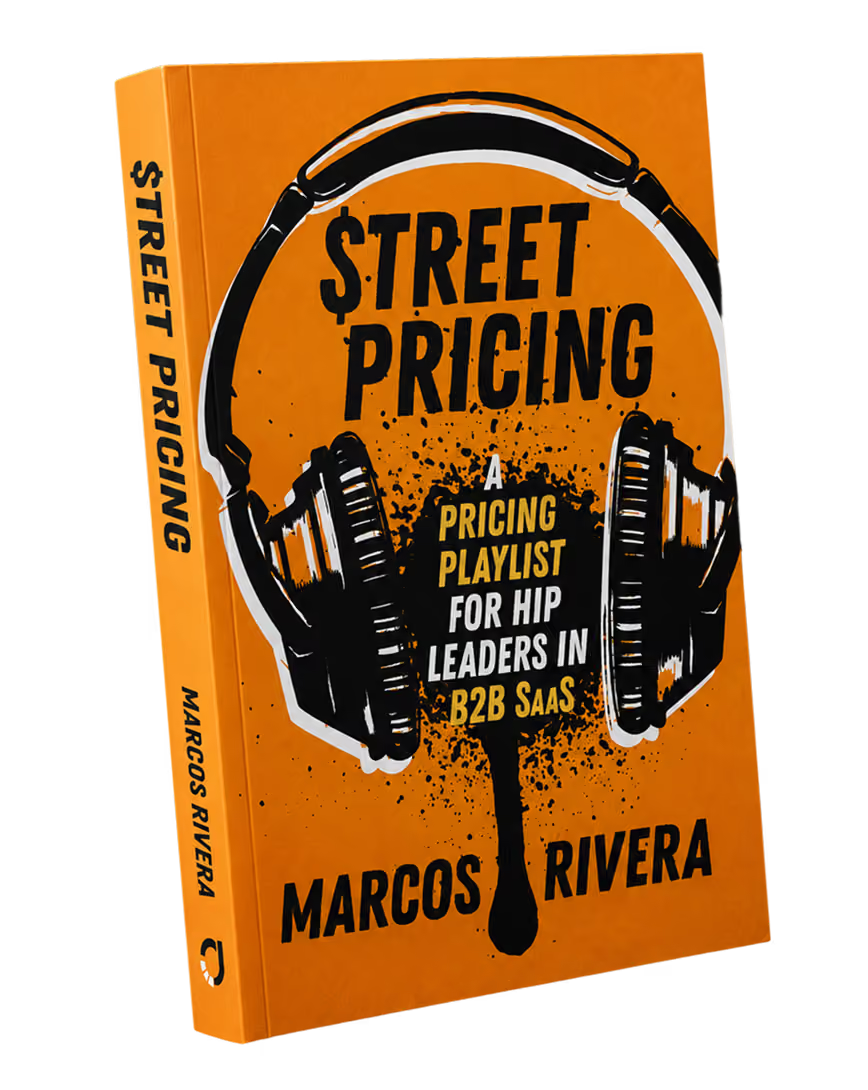
Street Pricing Book

Street Pricing Podcast

Questions from marketing and sales tech leaders.
Has Pricing I/O worked with marketing and sales tech companies?
Has Pricing I/O worked with marketing and sales tech companies?
Yes — 50 and counting, across sales performance and compensation platforms, conversation intelligence, sales intelligence and prospecting data, marketing automation, customer engagement, CPQ and contract platforms, and commerce analytics. Xactly increased unit pricing 58% and win rates 13% while cutting discounting 24%.
How should we price AI agents in a sales or marketing tool?
How should we price AI agents in a sales or marketing tool?
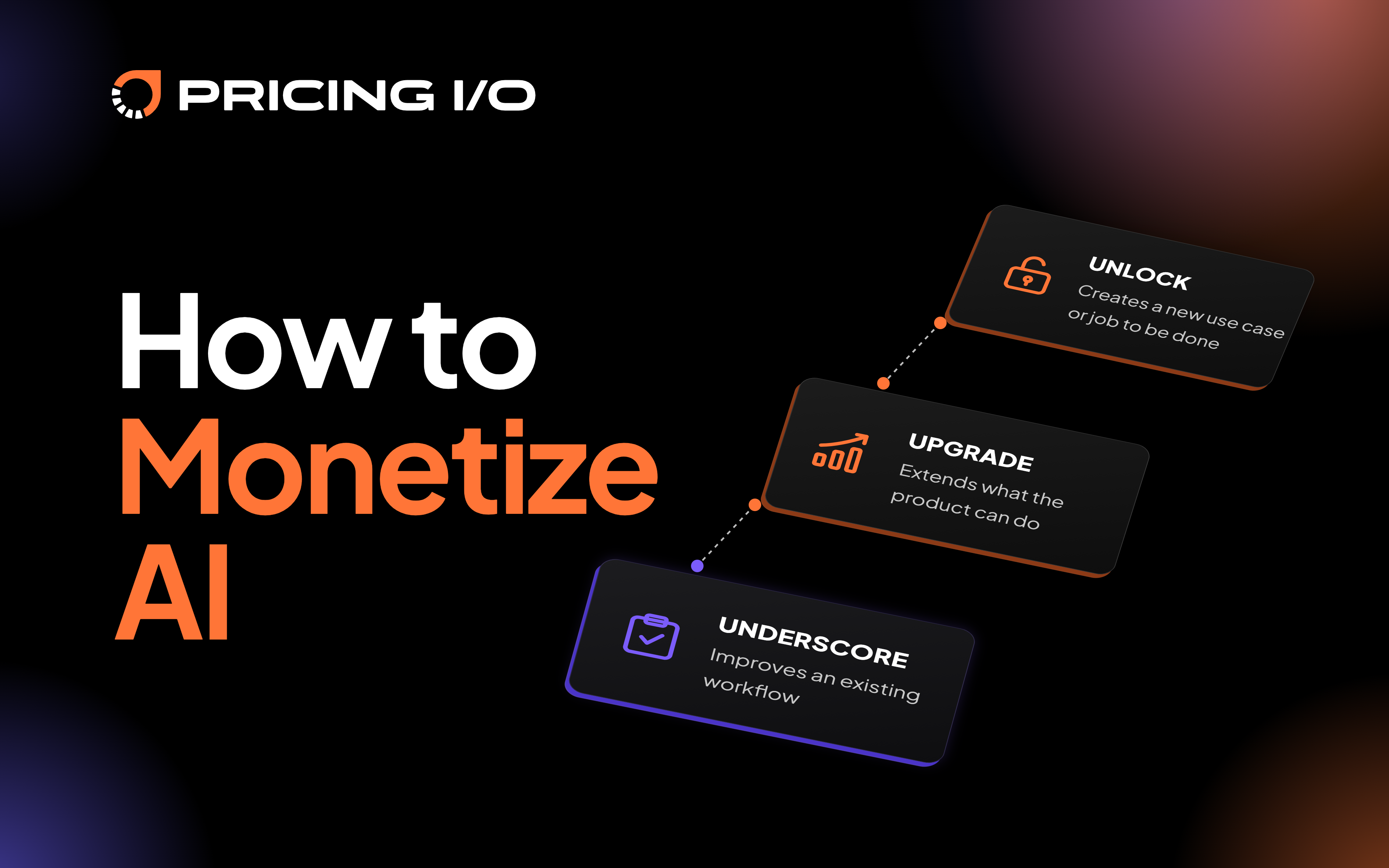
It depends on what the agent replaces. If it makes an existing workflow faster, build it into the base and raise the price once adoption passes 60%. If it takes on a job a person used to do, price it separately — per resolution, per conversation, or per workflow. The major CRM platforms have landed between roughly $0.50 and $2 per resolution. Those are anchors, not answers. More on pricing AI products.
Our seat count is shrinking as customers adopt AI. What do we charge for instead?
Our seat count is shrinking as customers adopt AI. What do we charge for instead?
Find the thing that grows when your customer gets more value — conversations handled, records enriched, campaigns run, meetings booked, deals sourced. It has to be measurable, it has to scale with their success, and your reps have to explain it in one sentence.
Should martech companies move to usage-based pricing?
Should martech companies move to usage-based pricing?
Usually not entirely. Our research with 296 software buyers found predictable total cost ranks far above a low entry price, and the pure variable models score worst of anything we tested. A fixed anchor with a variable component on top is where most of the market is landing.
Our buyers are consolidating their stacks. How does pricing help?
Our buyers are consolidating their stacks. How does pricing help?
Consolidation cuts the tools that overlap and the seats nobody uses. Pricing helps on both: packaging that makes your product the platform rather than the overlap, and a value metric that doesn't punish you when the customer trims headcount.
Our costs scale with data volume. How do we price that without scaring buyers?
Our costs scale with data volume. How do we price that without scaring buyers?
This is the analytics and CDP problem — your costs track events and records, but buyers want a number they can budget. Usually the answer is a fixed tier with generous included volume, clear overage rates, and alerts before anyone hits a threshold. Buyers will accept variability; they won't accept surprise.